Mesh, Leather, or Hybrid: What Testing Reveals That the Showroom Never Will
- Oliver McAbbot
- Jun 5
- 8 min read

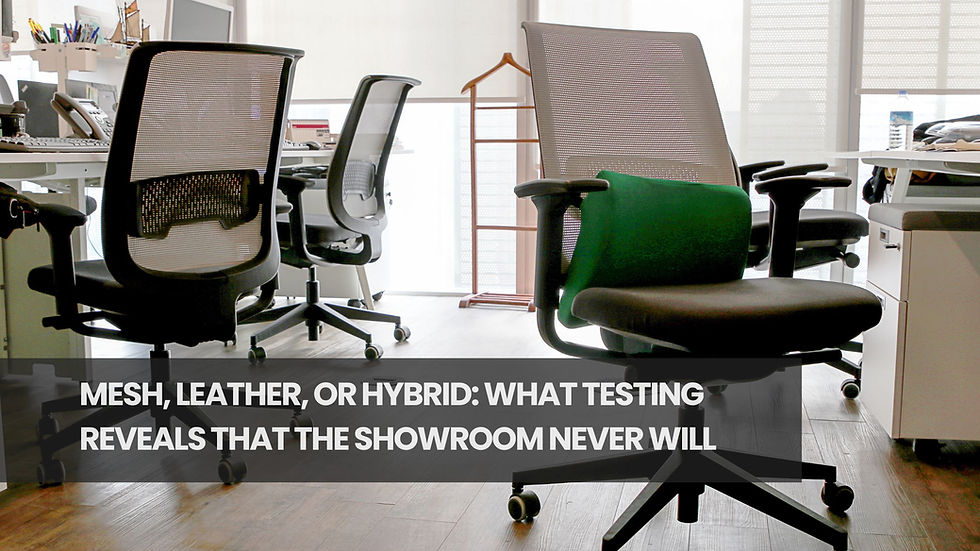
Most people choose a chair material by sitting in it for ninety seconds. That is the worst possible test. A material that feels plush in the first minute often becomes the thing you fight against by mid afternoon. The differences between mesh, leather, and hybrid backrests do not show up when you sit down. They show up at hour five.
I have tested chairs across both home setups and shared offices, and the pattern repeats. The first impression and the all day verdict almost never agree. A good premium ergonomic office chair is judged by how it feels when you have stopped noticing it, not by how it feels in the store. That single shift in how you test changes which material you should buy.
So before you pick a finish based on looks, it helps to understand what each material is actually doing under your weight for eight hours.
Why the material debate starts in the wrong place
The usual question is which material is most comfortable. That is the wrong question. Comfort is not a property of the material. It is a property of how the material manages heat, pressure, and support over time.
Mesh, leather, and hybrid surfaces each handle those three jobs differently. One of them will suit your body, your climate, and your sitting hours. The others will quietly work against you. The skill is matching the material to how you actually sit, not to how the chair looks in a product photo.
A material decision is really three decisions wearing one coat. Heat management, pressure distribution, and how the surface ages. Most buyers only judge the first thirty seconds of the first one.
What the first minute hides
Sit on any well padded leather seat and it feels generous immediately. That generosity is the problem. Soft foam compresses fastest where your weight concentrates, which means the spot that felt best on day one is the spot that flattens first. The early comfort is borrowing against later support.
Mesh does the opposite. It can feel firm or even unfriendly in the first minute because it does not collapse around you. That firmness is the surface spreading your weight rather than pooling it. The material that feels worse early often feels better at hour six.
What mesh actually does to your back over a full day
Mesh earns its reputation in one specific way. It moves air. After several hours in a warm room, the difference between a breathable back and a sealed one is not subtle. A sealed back traps heat against your spine, and trapped heat makes you shift, and shifting is what breaks a stable posture.
That is the real argument for mesh, and it has nothing to do with how modern it looks.
The tension you can feel only after lunch
A quality mesh back holds a light, even tension across the whole panel. You notice it least when it is set correctly. The test is not the morning. The test is whether your lower back still feels held after lunch, when fatigue usually pulls you into a slump.
Cheap mesh fails this test. It sags into a hammock shape within months, and once it sags it stops supporting the curve of your spine and starts cradling your tailbone instead. A backrest that cups your hips instead of your lumbar is doing the opposite of its job.
Good mesh keeps its shape because the frame, not the fabric, carries the load. That is why mesh quality lives in the edges and the frame, not the weave you can see. You can browse the range of office chairs in Australia and the visible weave will tell you almost nothing. The frame underneath tells the real story.
Where leather wins and where it quietly fails
Leather and quality faux leather have a genuine advantage, and it is not the one people assume. The advantage is the seat, not the back. A leather wrapped seat over dense foam gives a stable, slightly firm platform that holds your sitting bones in a consistent spot all day.
Where leather struggles is heat and humidity. In an Australian summer, a sealed seat surface holds warmth and moisture against you, and that becomes the reason you cannot settle. The material that looks the most premium can be the least suited to the climate you actually sit in.
The wear pattern that tells the truth
Leather ages honestly. After a year of real use, look at the front edge of the seat and the point where your forearms rest. Those wear points show whether the foam underneath has held or collapsed. A surface that creases into deep folds is usually sitting on foam that has already given up.
This is the same compression story that plays out invisibly in cheaper chairs, and it is worth understanding what happens to cheap foam over twelve months before you assume a soft seat is a good one.
A leather finish can hide a lot. It cannot hide the slow flattening of the foam beneath it, which is why the seat is where leather is won or lost.
The hybrid compromise most buyers misunderstand
Hybrid usually means a mesh back paired with an upholstered seat. On paper it sounds like the best of both. In practice it is a deliberate trade, and you should know which way the trade runs.
The mesh back keeps your spine cool and supported where heat builds up most. The padded seat gives your sitting bones a stable, firm base where mesh can feel too sharp over long hours. For most desk workers in a warm climate, that split solves the two real problems at once.
The mistake is treating hybrid as a luxury upgrade rather than a fit decision. It only works if the seat foam is dense and the mesh is properly framed. A hybrid built from a sagging back and a soft seat combines the weaknesses of both, not the strengths.
Why the seat depth still decides everything
Here is the part hybrids do not fix. Material choice means nothing if the seat is too deep for your legs. When the seat pushes into the back of your knees, you slide forward, and once you slide forward no backrest material can reach your lumbar. The correct seat depth leaves roughly a two finger gap behind your knees.
Get the depth right and a modest chair outperforms a luxury one. Get it wrong and the finest mesh in the world supports nothing but air. This is why fit beats finish every time, a point worth weighing against the features that matter more than design when you compare models.
Material is the last decision, not the first. It refines a chair that already fits. It cannot rescue one that does not.
How Australian conditions change the answer
Climate quietly tips the decision. In a humid coastal room or a western Sydney summer, a fully sealed leather chair will feel warmer and stickier by mid afternoon than the same chair in a cool office. Heat drives movement, movement breaks posture, and broken posture is what you feel in your back at five o’clock.
For most Australian home setups, breathability matters more than people expect. That pushes the sensible default toward mesh or hybrid for anyone sitting long hours in a room without strong climate control.
There is also the longevity maths. A chair you keep for eight years costs less per year than two cheaper chairs over the same period, even when the upfront price feels steep. That shift in thinking is part of why comfort became a performance decision rather than a soft extra. The right material is the one that still performs in year three.
If you want to see how a surface actually ages, it is worth watching how upholstery wears in real use rather than judging it new. New is easy. Year two is the honest test.
When you do compare in person, give each chair more than a minute. Sit through the part where your body starts to fatigue, because that is where the material reveals what it is really doing.
Common Mistakes
The biggest mistake is buying for the first impression. Soft and plush in the showroom often means flattened and unsupportive within a year. Firm and breathable usually ages better, even when it feels less inviting on day one.
The second mistake is ignoring climate. A sealed leather chair in a hot, humid room will make you shift all afternoon, and no amount of padding fixes a heat problem.
The third is treating material as the main decision. Seat depth, lumbar height, and frame quality matter more than the surface. People obsess over mesh versus leather while sitting in a chair that is the wrong size for their body.
The fourth is judging mesh by its appearance. The weave you can see tells you little. The frame and edge tension, which you cannot see in a photo, decide whether it sags in six months. For a fuller picture of build quality, the range of ergonomic desk chairs for home and office in Australia is a useful reference point for what a properly framed back looks like.
The last mistake is skipping the long sit. A material can only be judged across hours, not minutes, and a quick test almost always rewards the wrong chair.
Conclusion
There is no best material. There is only the material that suits your body, your hours, and your room. Mesh wins on heat and long term shape. Leather wins on seat stability and ages honestly if the foam is dense. Hybrid splits the difference and suits most warm climate desk work, as long as the seat is firm and the mesh is properly framed.
If you take one thing from years of testing, take this. Choose the chair that fits first, then let the material refine it. A chair that fits correctly is invisible. You only notice the material when something underneath it has already gone wrong. Watch a full chair walkthrough on video if you want to see what good construction looks like before you commit, because the surface is the easiest part to judge and the least important.
Frequently Asked Questions
Is mesh or leather better for long hours at a desk?
For long hours in a warm room, mesh usually wins because it manages heat and holds its shape. Leather can be excellent on the seat, but a sealed back traps warmth over a full day. The longer you sit, the more breathability matters.
Do mesh chairs sag over time?
Cheap mesh sags within months because the fabric carries the load. Quality mesh holds its shape for years because the frame carries the load and the fabric only spans it. Judge the frame and edge tension, not the visible weave.
Is a hybrid chair worth it?
A hybrid is worth it when the seat foam is dense and the mesh back is properly framed. It cools your spine and stabilises your seat at once, which suits most warm climate desk work. It is not worth it if either half is low quality.
Why does my expensive leather chair feel hot?
Leather and faux leather seal heat and moisture against your body. In a humid or warm room this builds up over the afternoon and makes you shift constantly. The material is doing exactly what leather does. The room is the part that does not suit it.
Does the material matter more than the chair size?
No. Seat depth, lumbar height, and frame quality matter far more than the surface. A correctly sized chair in a basic material will outperform a luxury material in the wrong size. Fit first, finish second.
How long should a good office chair last?
A well built chair should hold its support for around eight years of daily use. Cheaper chairs often lose their seat foam and backrest tension within one to two years, which makes them more expensive over time despite the lower sticker price.
What is the simplest way to test a chair before buying?
Sit in it for longer than a few minutes, ideally past the point where you start to fatigue. The first minute rewards soft padding. The fifth hour rewards real support. Only the long sit tells you which chair you will still like in a year.


Comments