What Your Office Chair Quietly Signals in a Professional Workplace
- Oliver McAbbot
- Jun 9
- 8 min read

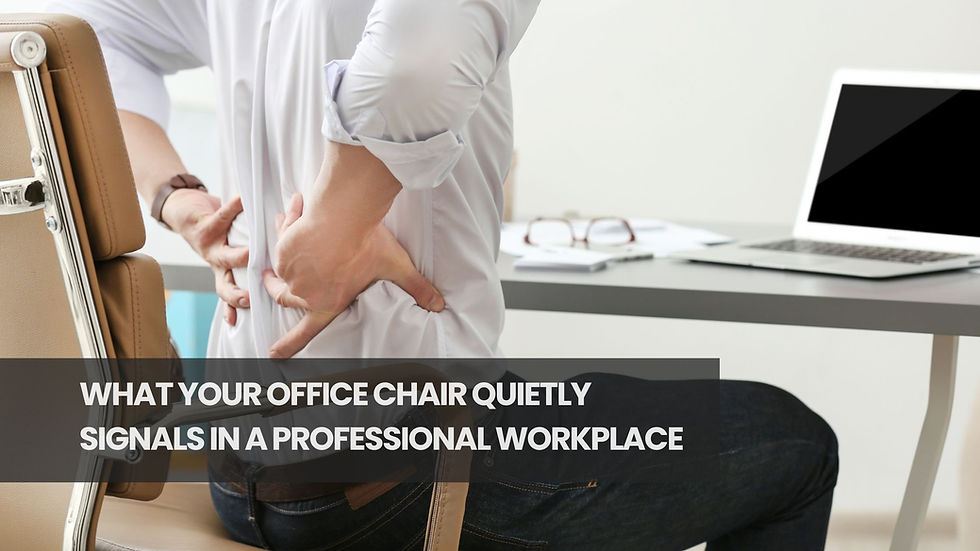
Walk into any office and you can read the hierarchy from the chairs alone. I have done it for years, almost without trying. The seats tell you who the company invests in, who it tolerates, and who it has stopped thinking about. The chair is one of the most honest status signals in a workplace, precisely because nobody thinks of it as one.
This is not only about appearances. A premium ergonomic office chair signals that a person is worth supporting through a full working day, and that signal is read by the person sitting in it as much as by everyone walking past. In my experience, people sit straighter, stay later, and take their work more seriously in a chair that takes them seriously first. The chair shapes the self image, not just the impression.
So the chair carries two messages at once, one outward to the room and one inward to the person. Both matter more than most workplaces realise.
Why the chair reads as a status signal
The short answer is that chairs are visible, permanent, and unequal. Everyone can see them, they stay put for years, and they are almost never identical across a workforce. That combination makes them a clear marker of who the organisation has chosen to invest in.
I have walked through offices where the difference between a manager’s seat and a junior’s was instantly obvious from across the room, and the people working there had read that difference long ago. Nobody announced it. The chairs said it. A workplace can talk all it likes about valuing its people, but the seats reveal where the money actually went, and people trust what they can see.
This is why the chair is such an honest signal. Words about culture are cheap. A room full of supportive chairs is not, which is exactly why it is believed.
What a worn out chair tells a new hire
A new employee forms an impression of how they are valued within their first week, and the chair is part of it. Sitting down on day one into a sagging, squeaking seat sends a message before anyone has said a word about career growth or investment in people.
I have heard people describe exactly this moment, the quiet deflation of being handed a worn out chair while being told how much the company values them. The chair contradicted the speech, and the chair won. How seriously a person takes their own work is shaped by how seriously their environment appears to take them, a link explored in why the chair you sit in affects how seriously you take your work.
The first chair a workplace gives someone is a statement of intent, and people read it as one.
Why the signal points inward too
Here is the part most people miss. The chair does not only tell others how you are valued, it tells you, and that changes how you behave. Sitting in a seat that supports you properly quietly raises how you carry yourself and how you approach the work.
In my testing and observation, people in well supported chairs hold a more upright, engaged posture, and posture feeds back into mindset. You sit like someone who is taken seriously, and over time you work like it too. A slumped, unsupported posture sends the opposite signal inward, a low, closed message your own body keeps repeating to you all day.
So the chair is a quiet daily input into your own self image at work, not just a thing other people glance at. The way a workspace shapes mindset runs deeper than decoration.
Why environment shapes performance
The physical environment you work in nudges how you perform, and the chair is the part of that environment you are in contact with for the entire day. A setup that supports you removes a constant low drain and lets your attention stay on the work.
I notice my own focus is steadier in a supportive chair, because I am not spending small amounts of attention managing discomfort. That attention goes back into the task instead. The broader point, that your surroundings shape your output more than you think, is made well in how your physical environment shapes how you work.
The chair is the most continuous piece of that environment, which is why its influence accumulates.
Why comfort became a performance question, not a perk
For a long time a good chair was treated as a perk, a nice extra for senior staff. That framing is outdated. Comfort is now understood as a performance variable, because a person who is supported through the day produces more and fades less than one who is fighting their seat.
I have watched the late afternoon dropoff hit harder in poor chairs than good ones. The discomfort accumulates, the posture collapses, and the last two hours of the day quietly underperform. A chair that holds you through hour seven and eight is protecting real output, which is why comfort is now a way to improve performance rather than a soft benefit, as why comfort is now a way to improve performance argues.
Treating chairs as a perk underinvests in the hours when performance matters most.
Why this matters more in hybrid and home offices
The signal has moved into the home office too. When people set up to work from home, the chair they choose for themselves becomes a statement about how seriously they take their own work, with no employer involved.
I have seen people invest in a proper home chair and describe feeling more professional, more in work mode, the moment they sat in it. The chair drew a line between leisure and work in a space that otherwise blurred the two. Browsing the range of office chairs in Australia is often where that shift in self image starts, the decision to treat your own workday as worth supporting.
At home, you are both the employer and the employee, and the chair is how you signal to yourself which one is showing up.
How to think about the chair as a signal
If you run a team, read your own office honestly. Look at the chairs your people sit in and ask what those seats say about how valued they feel, because they are saying something whether you intended it or not. Upgrading the seats is one of the most visible, believable investments in people you can make, and the range of ergonomic desk chairs for home and office in Australia shows what that investment looks like.
If you are setting up your own space, choose the chair as a statement to yourself about the seriousness of your work. The way a workspace shapes the way you work is something you can feel within a day of upgrading the seat you spend your hours in.
And if you want to understand what actually separates a chair that supports a professional day from one that only looks the part, a closer look at chair construction on video shows where the real difference lives, in the frame and mechanism rather than the badge.
The chair is always sending a message. The only choice is whether it is the message you want.
There is a generational shift here too. Younger workers increasingly read a workplace by its everyday conditions rather than its slogans, and the chair is one of the first conditions they notice. A company that invests in where people sit is making a claim that newer staff find far more convincing than a mission statement.
For real examples of how a supportive setup changes the way a team works, the updates shared for the premium office chair range show the difference in practice rather than in theory.
Common Mistakes
The first mistake is treating the office chair as invisible. It is one of the most visible and permanent status signals in a workplace, read by staff and visitors alike, whether or not anyone intends it to be.
The second is seeing a good chair as a perk for senior staff. Comfort is a performance variable now. A supported person fades less in the late afternoon, so good chairs protect output, not just morale.
The third is ignoring the inward signal. A chair does not only tell others how you are valued, it tells you, and that shapes your posture and mindset all day. A poor chair sends a low message your own body keeps repeating.
The fourth is underinvesting at home. When you work from home you signal to yourself how seriously to take your work, and a leisure chair blurs the line. A proper work chair draws it.
Conclusion
The office chair is one of the most honest signals in any workplace, precisely because no one thinks of it that way. It tells the room who the organisation invests in, and it tells the person sitting in it how seriously they are taken, which quietly shapes how seriously they work. Words about culture are cheap. A room of supportive chairs is believed.
Read the signal deliberately rather than letting it speak by accident. If you lead a team, the seats are a visible statement of how you value people. If you work for yourself, the chair is how you tell yourself the work matters. Comfort is no longer a perk, it is a performance decision and an identity one, and the chair is making both arguments every single day.
Frequently Asked Questions
Does my office chair really signal my status at work?
Yes. Chairs are visible, permanent, and rarely equal across a workforce, which makes them a clear marker of who an organisation invests in. People read the difference between a worn seat and a supportive one as a statement about how they are valued.
Can a poor office chair affect how seriously I take my work?
It can. The chair sends a signal inward as well as outward. Sitting in an unsupportive seat encourages a slumped, low posture that feeds a less engaged mindset, while a supportive chair encourages an upright, engaged posture that carries into how you work.
Is a good office chair a perk or a performance tool?
A performance tool. A person supported through the day fades less in the late afternoon, when discomfort would otherwise collapse posture and output. Treating a good chair as a senior perk underinvests in the hours when performance matters most.
What does a worn out chair tell a new employee?
It quietly contradicts any message about valuing people. A new hire forms an impression of their worth within the first week, and being handed a sagging, squeaking seat sends a clear signal before anyone discusses career growth or investment.
Does the chair signal matter when working from home?
Yes, perhaps more, because you are both employer and employee. The chair you choose for yourself signals how seriously you take your own work, and a proper work chair draws a line between leisure and work in a space that otherwise blurs them.
How should a manager think about office chairs?
Read your office honestly and ask what the chairs say about how valued your people feel, because they are saying something regardless. Upgrading seats is one of the most visible and believable investments in people a leader can make.
Why does comfort affect performance?
Because discomfort drains attention. A person managing a sore back or a sliding posture spends small amounts of focus on the chair all day, and that focus comes out of the work. A supportive chair removes the drain and protects the late hours of the day.


Comments